Engineering · Service
Borehole Installation & Yield Testing
Casing, electricals, and testing the flow rate.
A borehole is only as good as its installation
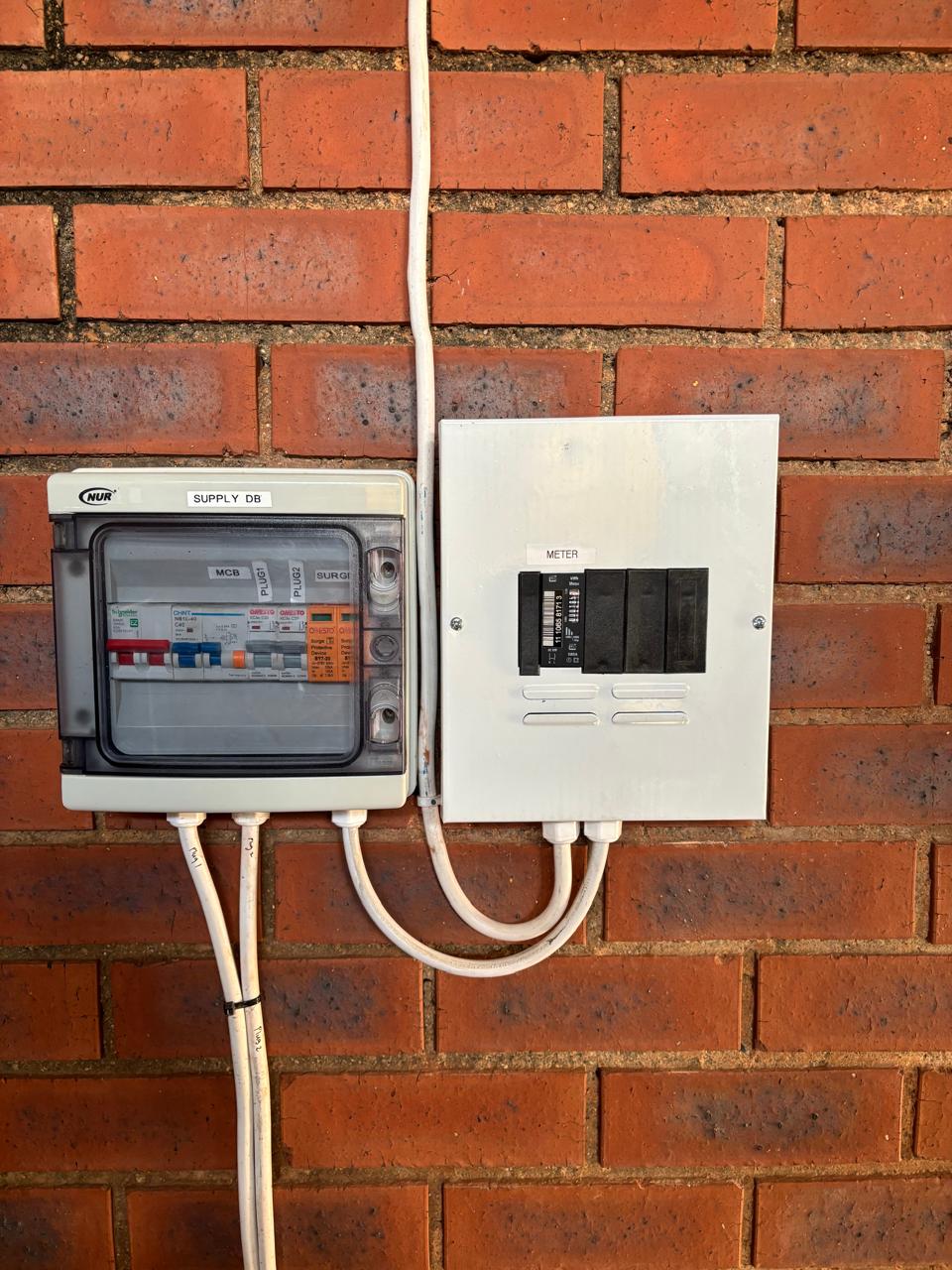
A borehole is only as good as its installation. We case and complete the hole, install the required electrical and mechanical components, and carry out yield testing so you know exactly how much water the borehole can sustainably deliver.
Drilling finds the water. This stage is what makes it safe to use for years to come, and confirms exactly how much of it you can rely on.
Call 078 038 0384What Casing Does and Why It Matters
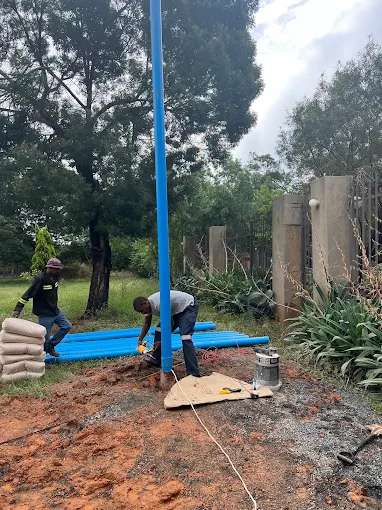
Casing lines the borehole to keep it structurally sound and to protect it from surface contamination working its way down into your water supply. The material and diameter we use depends on your depth and ground conditions.
uPVC casing is commonly used and resists corrosion well over time. Steel casing may be used at greater depths or where extra structural strength is needed, particularly in less stable ground.
Yield and Drawdown Testing Explained
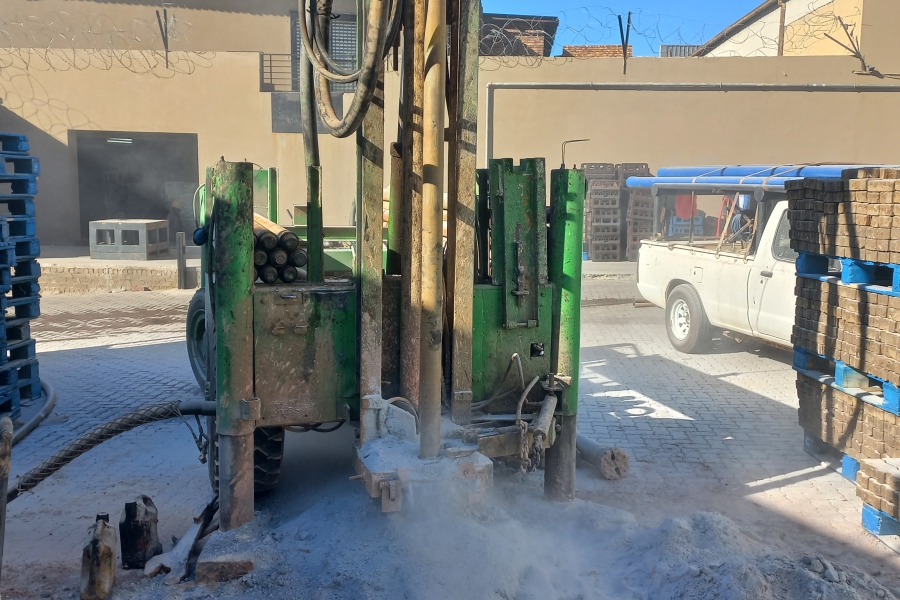
The amount of water that comes out of a borehole in the first few minutes of pumping is not the same as what it can sustainably deliver over months and years. Yield testing measures the difference, so your pump is sized correctly and your borehole is never pumped harder than it can recharge.
Constant Rate Test
The borehole is pumped at a steady rate over an extended period while the water level is monitored. This shows how the borehole behaves under sustained use, which is closer to how it will actually be used day to day.
Step Drawdown Test
The pumping rate is increased in stages, with the water level response measured at each step. This helps identify how the borehole responds as demand increases, and where that response starts to change.
Installation & Testing, Step by Step
- 01
Casing & Completion
The hole is cased to keep it structurally sound and protected from surface contamination, with casing material and diameter chosen for your depth and ground conditions.
- 02
Electrical & Mechanical Installation
Control panel, cabling, rising main and related components are installed, matched to the pump that will eventually run in the borehole.
- 03
Yield & Drawdown Testing
We test how much water the borehole can deliver, and how the water level responds under sustained and stepped pumping.
- 04
Recommendation & Report
You receive a recommended safe pumping rate and a written record of the installation and test results.
What's Involved
- Casing and borehole completion
- Electrical and mechanical installation
- Yield and drawdown testing
- Recommendation on sustainable pumping rate
Installation & Yield Testing Questions Answered
What is a yield test and why does my borehole need one?
A yield test measures how much water your borehole can sustainably deliver over time, not just how much comes out in the first few minutes of pumping. Without it, a pump could be sized too large for what the borehole can actually recharge, which risks running the borehole dry or damaging the pump.
What is the difference between a constant rate test and a step test?
A constant rate test pumps at one steady rate over an extended period to see how the borehole performs under sustained use. A step test increases the pumping rate in stages to see how the water level responds at each level. Depending on your site, we may use one or both to build an accurate picture.
What type of casing do you use, and why does it matter?
We fit casing based on your depth and ground conditions. uPVC casing is commonly used and resists corrosion well, while steel casing may be used at greater depths or where extra structural strength is needed. The right choice keeps the hole stable and protects it from surface contamination.
How do you decide the safe long term pumping rate for my borehole?
The safe rate is set below the maximum yield measured during testing, so the borehole is never pumped harder than it can recharge. This protects the pump, avoids premature depletion, and gives you a realistic daily supply figure to plan household or farm usage around.
Do I get a report or certificate after installation and testing?
Yes. You receive a written record of the installation and the yield test results, along with the recommended safe pumping rate. This is useful for your own reference and can support municipal registration requirements.
Ready to secure your own water supply?
Speak to our team about a survey, a new borehole or getting your existing system back to full flow.